How to Calculate Your Salary Hike Accurately Online
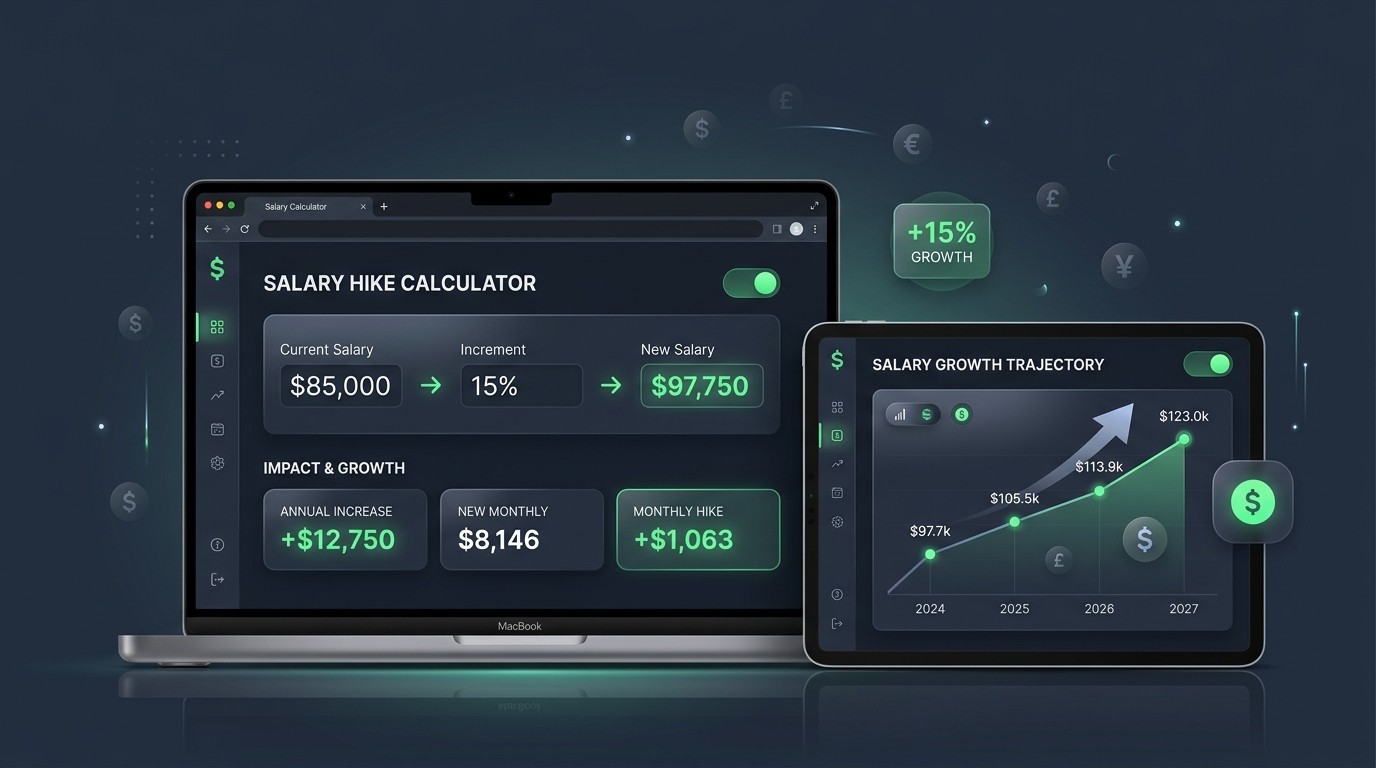
Hearing that your boss has approved a pay raise feels great, but the real question is always how to calculate a salary increase accurately before celebrating, whether you are switching jobs for a raise or staying put. A raise is usually quoted as a percentage increase over your current salary, yet the same percentage can mean very different amounts depending on whether your pay is hourly, monthly, or annual. A pay raise calculator, or any ordinary salary calculator, removes the guesswork, but it still helps to understand how to calculate a pay raise manually so you can check any number yourself. This guide walks through the exact salary formula, works through a few real examples, and explains when can you expect a pay raise and why. It also looks at what the research actually says about whether more money makes people happier. By the end, verifying any raise amount should take less than a minute.
The Core Formula
The salary increase percentage formula behind every pay raise calculator is simple: new salary equals old salary plus old salary multiplied by the raise percentage. To use it, convert percentage to decimal form, multiply it by the old salary, then add that figure back to the old salary. For someone earning $35,000 a month who is offered a 10 percent pay raise example to stay instead of leaving, the calculation is $35,000 plus $35,000 times 0.1, giving a new monthly salary of $38,500, an annual increase worth noting before any final decision. This same method lets you calculate new monthly salary or calculate new annual salary figures, since the raise percentage applies equally whether the starting figure is an hourly rate, a monthly salary, or an annual salary.
Working Backward: Finding the Percentage
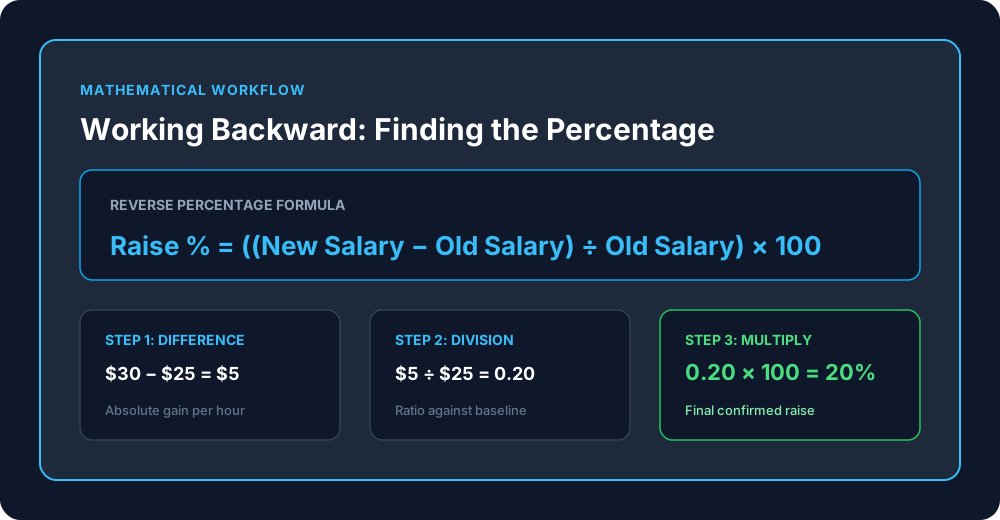
Sometimes you know the old salary vs new salary but not the percentage itself, which calls for calculate raise manually using the reverse formula: raise equals new salary minus old salary, divided by old salary, multiplied by 100. Someone whose hourly rate moved from $25 to $30 can plug those numbers in directly, giving a 20 percent pay raise example rather than having to guess. This same percentage increase calculator logic applies whether you are checking an hourly rate, a monthly salary, or a full annual salary figure, which is useful when comparing job offers that quote pay differently.
A Few Worked Examples
Smaller raises are easy to miscalculate in your head, so a 5 percent pay raise calculation on a $1,000 monthly salary, for instance, is 0.05 times $1,000 added to the original amount, giving exactly $1,050. Interestingly, an annual raise vs monthly raise of the same percentage produces an identical proportional increase. a 10 percent annual raise on $12,000 works out to $1,200 a year, exactly the same $100 a month as a 10 percent raise applied monthly. Reaching an extra month salary raise takes an 8.33 percent raise, since that percentage, compounded over 12 months, adds up to one additional month's salary by year end.
| Old Salary | Raise | New Salary |
|---|---|---|
| $35,000 / month | 10% | $38,500 / month |
| $25 / hour | 20% | $30 / hour |
| $1,000 / month | 5% | $1,050 / month |
| $1,000 / month | 8.33% | $1,083 / month, one extra month's pay per year |
Running your own numbers through this same structure, rather than trusting a quoted percentage, is the fastest way to confirm a pay rise is accurate before it is deposited.
When Can You Expect a Pay Raise
Common reasons for a pay raise include length of service, often reviewed annually or every two years; an employee's performance, usually assessed during a performance review; merit increase for new skills, added responsibilities, or a promotion; inflation adjustment to protect your cost of living as prices rise; and, occasionally, a change in the law, such as a new minimum wage. Knowing which of these applies to your situation helps set realistic expectations for your next performance review, and is worth checking against any pay raise FAQ your HR department publishes.
Does Money Buy Happiness
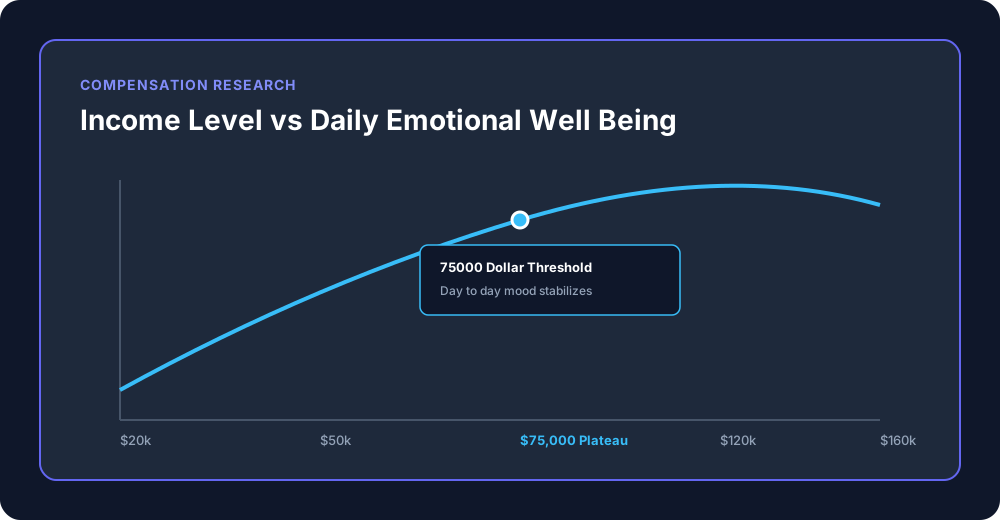
Research on this question is more nuanced than it first appears. One large-scale analysis found that higher income steadily improves how people evaluate their overall life, but emotional well-being levels off once annual salary and happiness research would put the 75000 dollar threshold, after which additional net pay income stops meaningfully improving day-to-day mood, at least on average. Beyond that point, spending on experiences or on other people tends to produce more satisfaction than spending the extra gross pay on material purchases.
Conclusion
Whether you are reviewing an offer, negotiating directly, or simply checking your next payslip, accurate raise calculation always comes back to the same formula: new salary equals old salary plus old salary times the raise percentage, and the reverse version solves for the percentage itself. Verify your raise using real numbers rather than a quoted figure, understand why the raise was granted, and keep the happiness research in mind before assuming a bigger number alone will change how you feel day to day.