When Appraisals Happen: How to Measure Salary Growth
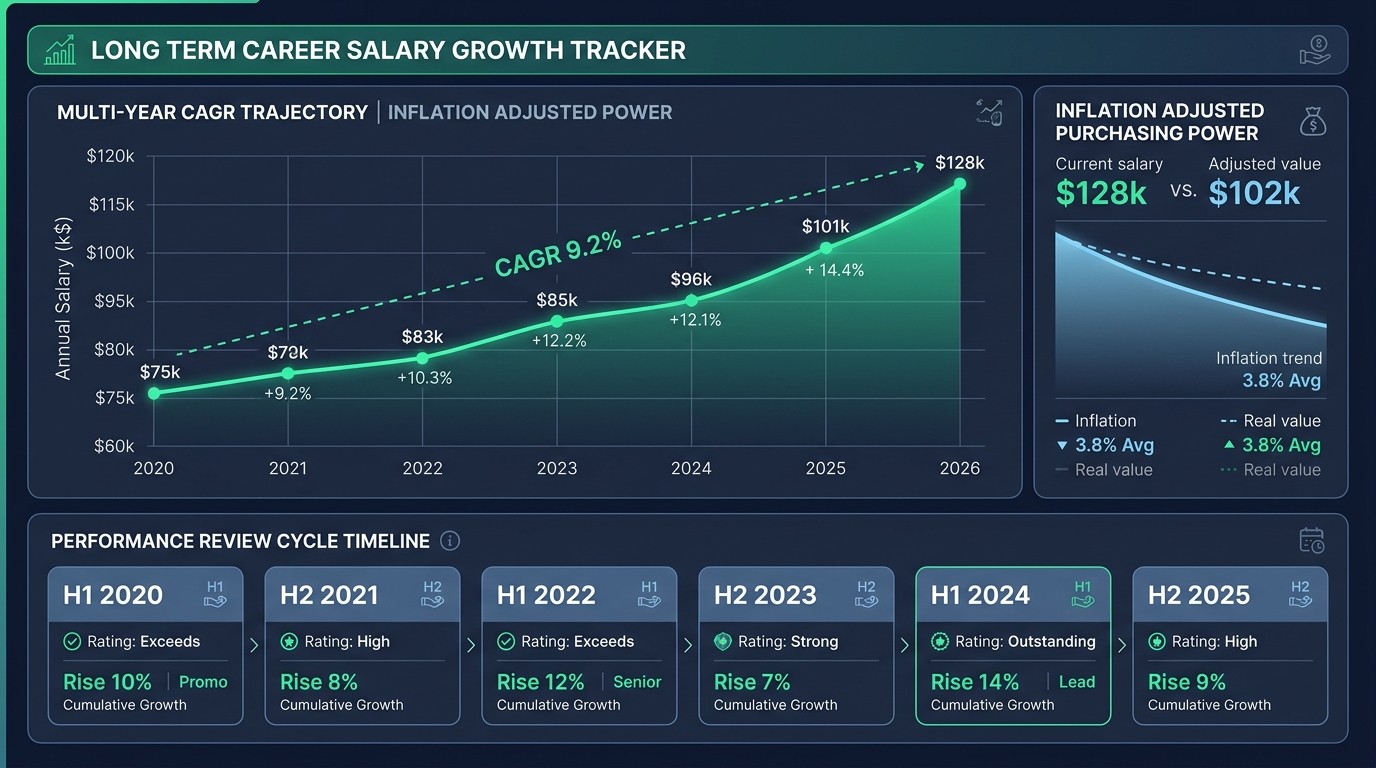
Knowing when appraisals happen helps you measure salary growth on a fair, repeatable schedule. Most employees receive an annual appraisal, but promotions, market adjustments, and retention offers can trigger off-cycle increments. Each event changes your salary, so tracking the timing matters as much as the percentage. A simple salary growth formula compares your old pay with your new pay, while inflation shows the real gain. Clear records also strengthen your negotiation at the next review. This guide explains each step, with examples, a reference chart, and the mistakes to avoid.
Why Appraisal Timing Shapes Your Salary Growth
The date of an appraisal decides when your new salary begins and how often you can measure growth. Waiting a full year between increments produces a different growth rate than receiving two smaller raises in the same period. Recording each increment date lets you compare years fairly, and shows whether your pay progression matches your career growth.
Understanding Appraisal Cycles and Increment Dates
An appraisal cycle is the regular period in which an organisation reviews performance and decides increments. The annual appraisal hike is a standard yearly increment for eligible employees, and its percentage depends on company performance, budget allocation, and economic conditions. Note your cycle dates, the effective date of each revision, and the rating you received, so every comparison uses clean data.
Annual Appraisals vs Mid-Year Reviews
A yearly review compares twelve months of results and usually produces one increment. Some organisations add a mid-year review, which can adjust goals or pay earlier. Whichever schedule applies, measure growth between the same points in time, such as one April to the next. Mixing review dates makes the growth percentage look larger or smaller than it truly is.
Promotions and Off-Cycle Increments
A promotion can raise pay between appraisals, with promotional hikes often ranging from 15 to 30 percent. A market adjustment aligns salary with industry standards, and a retention hike or counteroffer may match an external offer. These off-cycle increments count toward your total salary growth, so log them separately from your annual appraisal hike to understand each source of increase.
The Core Formula for Measuring Salary Growth
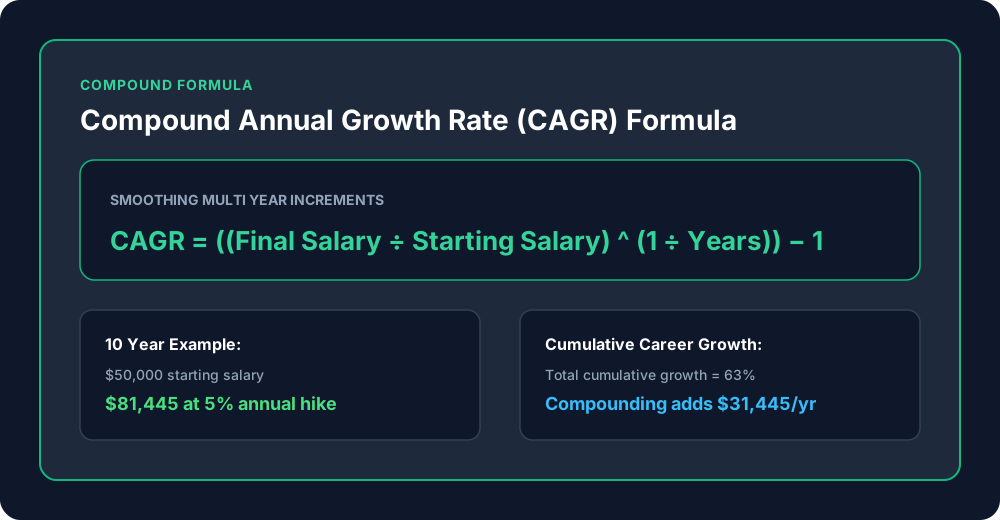
The salary growth formula is Growth % = ((New Salary − Old Salary) ÷ Old Salary) × 100. For several years, use the compound annual growth rate, calculated as (Final Salary ÷ Starting Salary) ^ (1 ÷ Years) − 1. This CAGR smooths uneven increments into one yearly figure. Both methods work for base pay or CTC, provided you compare the same components.
Appraisal Events and Typical Hike Ranges
| Appraisal Event | When It Happens | Typical Range |
|---|---|---|
| Annual appraisal | Yearly cycle | 5-11% |
| Performance-based hike | After a top rating | 8-12% |
| Promotion | Move to a higher role | 15-30% |
| Market adjustment | After a salary survey | Varies |
| Retention counteroffer | External offer received | Often matches offer |
| Job switch | New employer | 20-40% |
A Worked Example Using Multi-Year Salary Figures
Take a $50,000 salary with a 5 percent annual hike for 10 years. Gross pay reaches about $81,445. Applying the CAGR formula, $81,445 divided by $50,000, raised to one-tenth, minus one, returns 5 percent, which confirms the annual rate. The total growth is about 63 percent, even though each single year looked modest.
Measuring Real Growth After Inflation
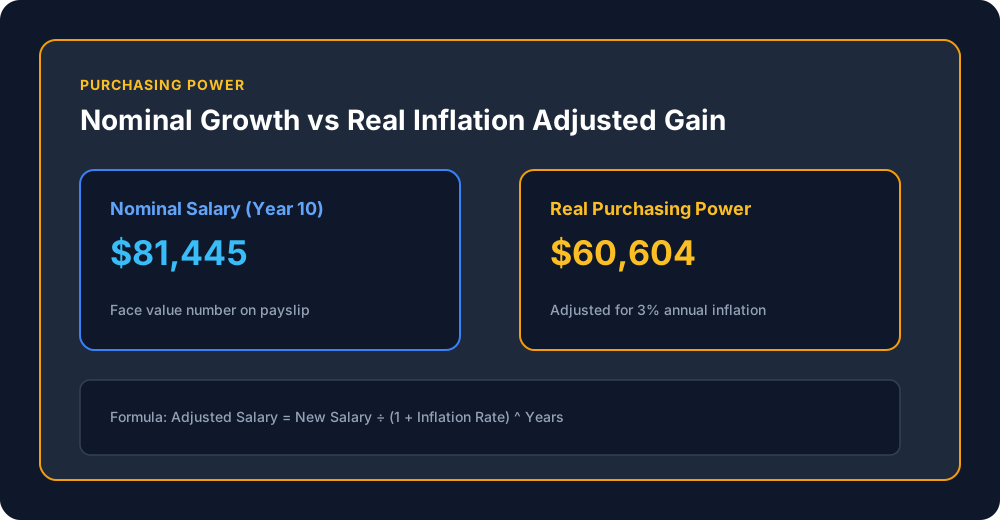
Nominal growth ignores inflation, so it can overstate your real gain. Use Adjusted Salary = New Salary ÷ (1 + Inflation Rate) ^ Years. A $50,000 salary growing 5 percent yearly reaches $81,445 after 10 years, yet at 3 percent inflation its purchasing power equals only $60,604. If inflation outpaces your raises, net gains can stagnate.
Common Mistakes When Tracking Salary Growth
Common errors include dividing by the new salary, mixing monthly and annual figures, and ignoring off-cycle increments. Others compare gross pay with take-home pay, forget inflation, or treat bonuses as permanent salary growth. Keep one tracking sheet with dates, components, and percentages, so every calculation stays consistent from one appraisal to the next.
Comparing Your Growth With Industry Benchmarks
Benchmarks give your percentage context. Annual appraisal hikes average roughly 5 to 11 percent, while internal raises average about 5 to 15 percent. Top performance ratings may earn 8 to 12 percent, and job switches often reach 20 to 40 percent. Compare your growth with these ranges, adjusting for industry, role, company budget, and economic conditions.
Quick Reference Chart for Salary Growth Measures
The chart above lists common appraisal events and their typical hike ranges. Use it with your growth percentage, CAGR, and inflation-adjusted salary to judge each appraisal fairly. Review your records after every increment, and use a salary growth calculator for multi-year projections whenever you plan savings, loans, or your next negotiation.
Conclusion
Measuring salary growth starts with knowing when appraisals happen and recording every increment date. Always use the growth formula for single yearly changes, the CAGR for multiple years, and inflation adjustment for real gains. Compare your results with reliable industry benchmarks, track off-cycle increments, and keep consistent written records. Clear, accurate numbers make your next appraisal conversation stronger and help you plan finances with real confidence over the long term.