How to Calculate Annual CTC Hike in Seconds
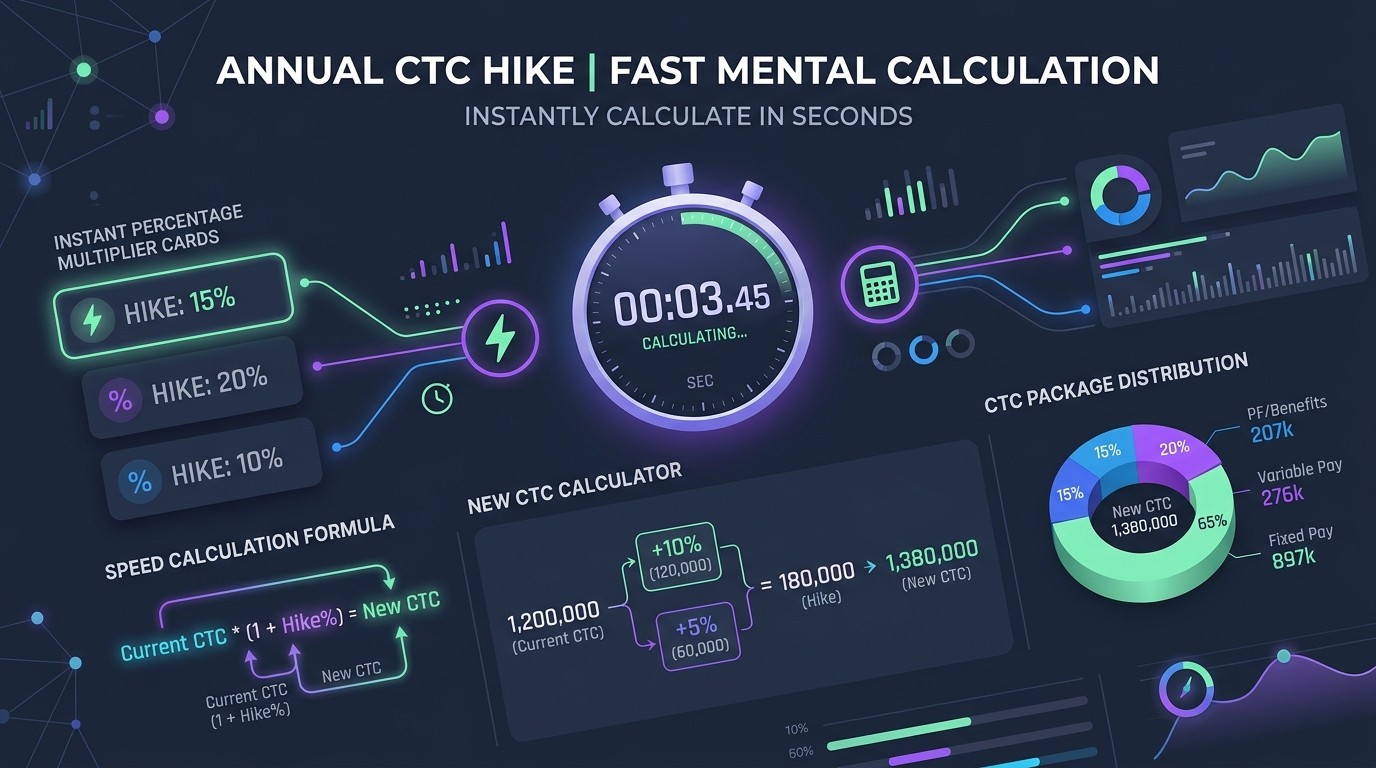
Learning how to calculate annual CTC hike in seconds removes the guesswork from every appraisal and job offer. CTC, or cost to company, is your total yearly salary package, so the hike percentage should be measured on the full annual figure. Two short formulas give you the increment amount and the new CTC without a spreadsheet. A salary hike calculator can confirm the result, but the manual method helps you spot mistakes. Fast, accurate numbers also make salary negotiation and financial planning easier. This guide covers each step, with examples, a multiplier chart, and common errors.
Why Annual CTC Hike Calculation Should Be Quick
A salary hike, or increment, is a permanent increase in your base pay, shown as a percentage or a fixed amount. Employees often receive the revised CTC in a letter without the percentage, so quick calculation matters. Knowing the annual hike within seconds helps you negotiate, compare offers, and plan savings before the new salary starts.
Understanding Annual CTC and Its Components
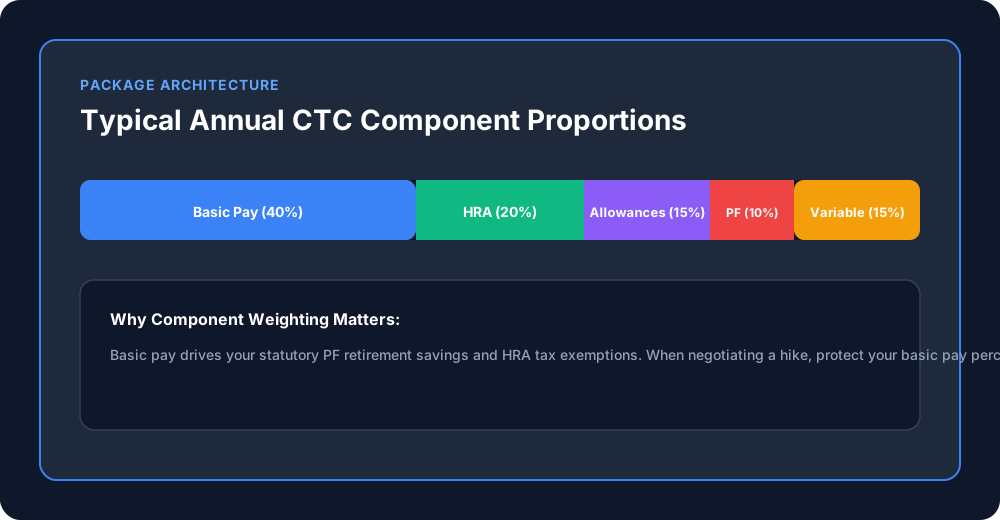
Annual CTC is the full yearly package, including basic salary, allowances, bonus, variable pay, and employer contributions such as PF and gratuity. Basic salary usually forms about 35 to 40 percent of CTC. Because allowances and bonuses change often, always compare annual CTC with annual CTC, not monthly pay with yearly packages.
The Core Formula for Annual CTC Hike
The annual CTC hike formula has two parts. First, Increase Amount = (Hike % ÷ 100) × Current CTC. Second, New CTC = Current CTC + Increase Amount. To find the hike percentage from two figures, use Hike % = (Increase Amount ÷ Current CTC) × 100. These formulas work for monthly or annual values if both use the same period.
Step by Step: Calculating Your Hike in Seconds
First, note your current annual CTC. Second, record the new CTC from your revision letter. Third, subtract the old figure to get the increase amount. Fourth, divide it by the current CTC and multiply by 100. For instance, ₹60,000 rising to ₹75,000 is a ₹15,000 increase, which equals a 25 percent hike.
The Multiplier Shortcut for Instant Results
The multiplier shortcut gives the new CTC in one step. Convert the hike percentage into a decimal, add one, and multiply by your current CTC. A 10 percent hike means multiplying by 1.10, and a 30 percent hike means 1.30. This mental math trick skips the separate increment step, which makes instant estimates possible during negotiation calls.
Annual CTC Hike Multipliers on a ₹10,00,000 CTC
| Hike Percentage | Multiplier | New Annual CTC |
|---|---|---|
| 10% | x 1.10 | ₹11,00,000 |
| 15% | x 1.15 | ₹11,50,000 |
| 20% | x 1.20 | ₹12,00,000 |
| 25% | x 1.25 | ₹12,50,000 |
| 30% | x 1.30 | ₹13,00,000 |
| 40% | x 1.40 | ₹14,00,000 |

A Worked Example Using Annual CTC Figures
Suppose your annual CTC is ₹8,00,000 and you receive a 40 percent hike. The increase amount is 40 divided by 100, times ₹8,00,000, which equals ₹3,20,000. Adding it gives a new CTC of ₹11,20,000. Using the multiplier 1.40 returns the same ₹11,20,000, so both methods confirm the calculation.
Why Annual CTC Hike Differs From Take-Home Gain
A CTC hike does not raise take-home pay by the same percentage. Higher basic salary increases PF contributions, and tax or professional tax deductions may also rise. Changes in HRA or special allowance shift the net salary as well. Estimate in-hand salary separately, because net pay shows what actually reaches your bank account.
Common Mistakes When Calculating Annual CTC Hike
Common errors include dividing by the new CTC instead of the current CTC, mixing monthly and annual figures, and comparing gross salary with CTC. Others forget to include bonus or variable pay on both sides. Always list each salary component before you calculate, then verify the answer with a salary hike calculator to avoid manual errors.
Comparing Your Hike With Typical Appraisal Ranges
Context turns a percentage into a verdict. Annual appraisal hikes average roughly 5 to 11 percent across most industries, while promotions often range from 15 to 30 percent. Job switches can reach 20 to 40 percent. These ranges are general benchmarks, so adjust them for your industry, role, experience, and company performance before judging your annual hike.
Quick Reference Chart for Annual CTC Hike Values
The chart above shows the new CTC for common hike percentages on a ₹10,00,000 package. A 20 percent hike gives ₹12,00,000, and a 30 percent hike gives ₹13,00,000. Keep this reference table handy for fast checks, and use a salary hike calculator whenever you need exact decimals for offer letters, budgets, or appraisal discussions.
Conclusion
Calculating your annual CTC hike takes a few seconds once you know the formula. Subtract the current CTC from the new CTC, divide by the current figure, and multiply by 100. Use the multiplier shortcut to find a new CTC from a known percentage. Compare like with like, remember that take-home pay grows by a smaller percentage, and confirm results with a calculator before your next negotiation or appraisal conversation.